
Ramadan & Eid Date Planner UAE: A Wedding Planning Guide
Wedding Planning · August 13, 2026
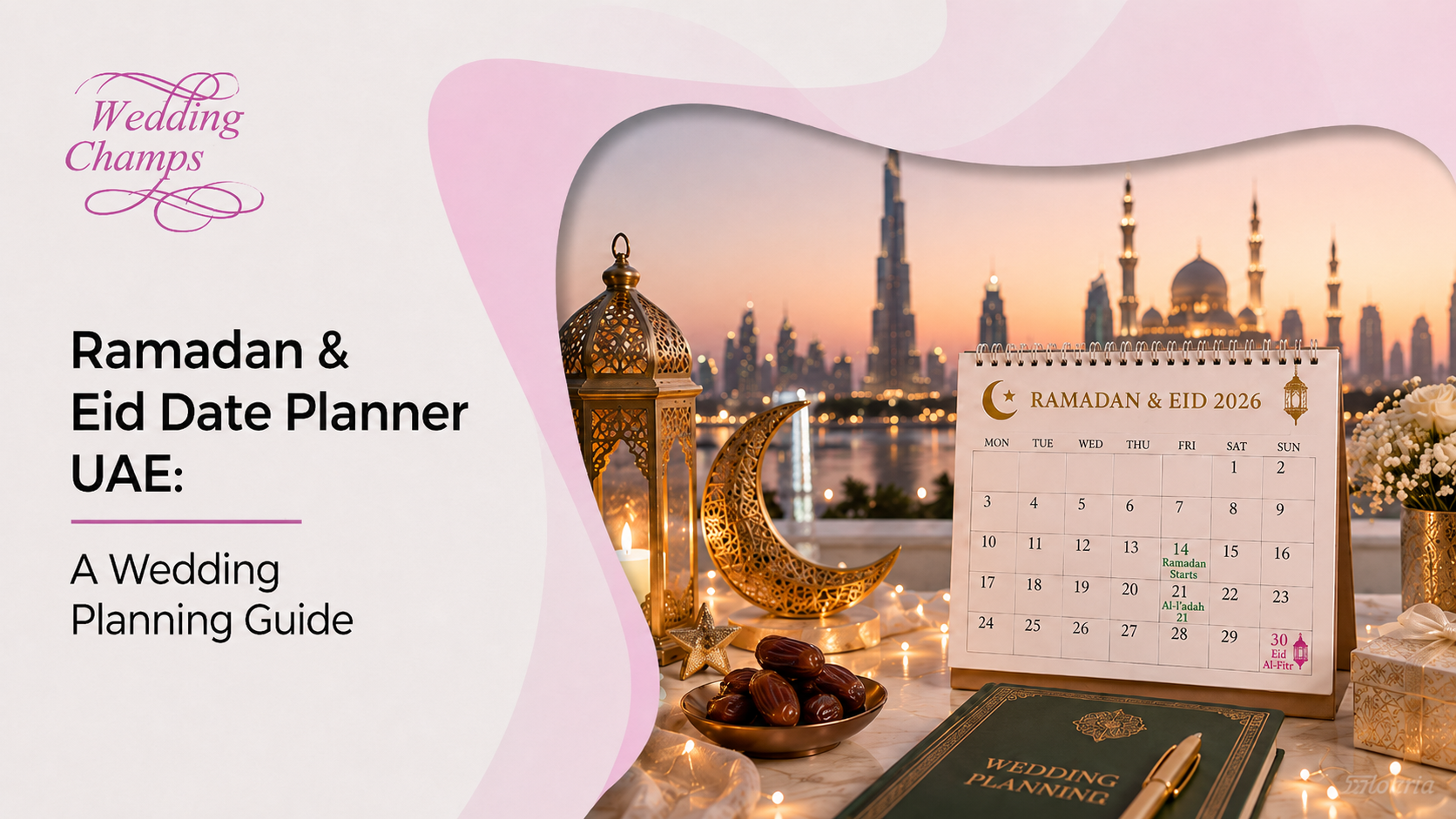
Picking your wedding date is one of the first big decisions you’ll make, and if you’re planning a wedding in the UAE, Ramadan and Eid deserve a spot on that shortlist before you book anything or send a single invitation.
Ramadan is the ninth month of the Islamic calendar and follows the lunar calendar, which means it shifts roughly 11 days earlier each year on the Gregorian calendar. It runs either 29 or 30 days, depending on the sighting of the new moon.
Knowing where Ramadan and Eid fall matters for more than just the ceremony date, it touches venue availability, guest travel, catering, wedding timings, and accommodation. This planner walks through what to think about when building your wedding date and celebration around these occasions.
Why Ramadan and Eid Dates Matter for Wedding Planning
Ramadan changes the rhythm of daily life across the UAE, dining hours shift, working schedules adjust, and evening activity picks up. The UAE Government notes that restaurants and businesses may adjust their operating hours, with much of the dining and social activity moving to after sunset.
That has real knock-on effects for a wedding. Before locking in a date, it’s worth thinking through:
- Venue availability
- Wedding reception timings
- Catering schedules
- Guest travel plans
- Hotel availability
- Vendor working hours
- Traffic and transportation
- Family commitments
- Religious considerations
- Eid holidays and celebrations
Working through these ahead of time saves you from scrambling to change plans later.
Ramadan & Eid Date Planner for UAE Weddings
Because Islamic dates depend on moon sighting, treat any Gregorian date as an estimate until it’s officially confirmed.
Occasion
Approximate Timing
Wedding Planning Consideration
Ramadan
Changes every year
Consider fasting, evening schedules, and venue timings
Laylat Al Qadr
Last 10 nights of Ramadan
Avoid scheduling important wedding events if families observe this period
Eid Al Fitr
Immediately after Ramadan
Check holiday travel, venue availability, and guest plans
Eid holidays
Around Eid Al Fitr
Guests may travel or have family commitments
The UAE Government states that Eid Al Fitr holidays are linked to 1-3 Shawwal, with an extra holiday day added when Ramadan runs the full 30 days. As with everything Islamic-calendar related, the final dates depend on the official moon-sighting announcement.
Should You Have a Wedding During Ramadan?
There’s no single right answer here, it really comes down to your family, your guests, the style of wedding you want, and your own religious preferences.
A traditional daytime reception can be tricky during Ramadan, since Muslims observing the fast don’t eat or drink from dawn until sunset. Evening events, though, can absolutely still work with the right planning.
If a Ramadan wedding is on the table, talk to your venue and vendors about:
- Iftar timing
- Dinner service
- Prayer arrangements
- Guest comfort
- Venue operating hours
- Catering schedule
- Photography timings
- Transportation after sunset
The UAE Government points out that Iftar and Suhoor are central parts of Ramadan, and that many restaurants build special dining experiences around them during the month, something worth factoring into your catering plans.
Planning a Wedding Around Eid Al Fitr
Eid Al Fitr closes out Ramadan and is a major celebration for families across the UAE. The festive atmosphere can make it tempting as a wedding period, but there are practical trade-offs to weigh.
A lot of people use the Eid break to visit family, travel, host relatives, attend gatherings, take holidays, or celebrate with friends, which means some of your guests may already have plans of their own.
If you’re leaning toward an Eid wedding, check in with your closest family and most important guests before locking in the date, and get ahead of venue and hotel bookings early since holiday periods fill up fast.
How to Choose the Best Wedding Date in the UAE
Picking a date is about more than finding an open Saturday. A few things worth working through in order:
Check Ramadan and Eid dates first
Before you even start looking at venues, check where Ramadan and Eid are expected to land in your chosen year. Since Islamic dates are lunar, don’t assume a Gregorian date that worked one year will hold the next, Ramadan keeps shifting earlier each year.
Think about your guests
Consider where people are actually traveling from. If you’ve got guests coming from India, Pakistan, Saudi Arabia, the UK, Europe, or other GCC countries, give them enough runway to book flights and accommodation, especially if your wedding lands near a holiday period. A UAE Wedding Guest Guide covering hotels, transport, and things to do can help guests plan their trip around your wedding.
Check venue availability early
Once you’ve shortlisted a few dates, start reaching out to venues. Popular Dubai and Abu Dhabi venues can book up fast during busy periods, so it’s worth asking each one:
- Are weddings held during Ramadan?
- What timings are permitted?
- Are there special Ramadan restrictions?
- Is catering available after Iftar?
- Are there additional charges?
- What time can vendors enter?
- Are there parking or transportation considerations?
Wedding Venues in Dubai is a good place to compare your options before deciding.
Ramadan Wedding Planning Checklist
If Ramadan ends up being your window, this checklist covers the essentials.
Venue
- Confirm Ramadan operating hours
- Check reception timing
- Confirm catering arrangements
- Ask about Iftar service
- Check prayer facilities
- Confirm guest parking
Catering
Walk through the meal schedule with your caterer in detail. Depending on your guest list, you may need Iftar, dinner, desserts, drinks, or Suhoor covered, and your catering team should know exactly when each part of the event happens and what your guests will expect.
Wedding Photography During Ramadan
Photography timing often needs to shift too. A lot of couples end up preferring photos after sunset or later in the evening during Ramadan. It’s worth discussing the full timeline with your photographer in advance, before the ceremony (getting-ready shots, detail shots, couple portraits) versus after sunset (family photos, ceremony, reception, dinner, more couple portraits).
If you’re planning an outdoor shoot, talk through the best timing and location with your photographer ahead of time. UAE Wedding Photography Ideas is worth browsing for inspiration.
Wedding Vendors During Ramadan
Your vendors’ schedules can shift during Ramadan too, so it’s worth confirming timings directly with your photographer, videographer, makeup artist, hair stylist, decorator, caterer, DJ or entertainment team, transportation provider, and wedding planner. Don’t assume anyone’s regular hours will carry over unchanged, build a detailed day-of schedule and share it with the full team. Wedding Vendors in the UAE can help with the vendor search itself.
Eid Wedding Planning Tips
If your wedding lands close to Eid Al Fitr, get an early start. Send invitations well ahead of time, since guests may already have Eid plans of their own. Confirm accommodation early too, hotels get busy around holiday periods, especially in popular destinations, and keep an eye on transportation, since traffic and travel demand tends to spike over public holidays.
Check in with vendors who may have their own family commitments during Eid, and build some flexibility into your schedule for guests traveling in from different locations.
What About a Wedding Right After Ramadan?
Some couples prefer to hold their wedding shortly after Ramadan rather than during it, but the period around Eid can still be busy. Before settling on a date, check Eid holidays, guest availability, venue availability, hotel and flight prices, vendor schedules, and family travel plans. A date a few weeks past Eid often gives more breathing room.
Build Your Complete UAE Wedding Planning Calendar
Ramadan and Eid work best when treated as part of your overall planning calendar rather than as separate, isolated dates. Start with your preferred wedding month, then work through the rest: wedding date, then Ramadan, then Eid, then venue, vendors, invitations, guest travel, and final preparations.
Our 12-Month UAE Wedding Checklist covers the full month-by-month timeline if you want to track everything from venue booking through to final wedding-day prep.
Quick Ramadan & Eid Wedding Date Tips
- Check the Islamic calendar before selecting your date
- Remember Ramadan dates aren’t fixed on the Gregorian calendar
- Treat predicted Ramadan and Eid dates as tentative until confirmed
- Confirm official dates once they’re announced
- Ask your venue about Ramadan-specific timings
- Confirm catering and Iftar arrangements
- Check your key guests’ availability
- Book accommodation early if guests are traveling
- Confirm vendor schedules
- Send invitations early for holiday-period weddings
- Keep some flexibility around Eid
The UAE Government confirms that Islamic holidays are determined by moon sighting, so the final dates can shift from what’s predicted on the calendar.
Final Thoughts
Planning a wedding around Ramadan and Eid takes a bit more forethought, but it’s entirely manageable with the right timeline. The key is checking the expected dates early, understanding how Ramadan might affect your timings, staying in close contact with your venue and vendors, and being mindful of your guests’ religious and travel commitments.
Whether you’re getting married in Dubai, Abu Dhabi, Sharjah, or anywhere else in the UAE, getting the date right up front makes everything that follows, venue, vendors, invitations, outfits, a lot easier to manage.
With WeddingChamps, couples can explore wedding-planning resources and find inspiration for a celebration that actually fits their timeline.
FAQs

Let's plan your destination wedding
Share a few details and a dedicated planner replies within 24 hours with venues, ideas and honest pricing. No pressure, no obligation.